

Why Dedicated Squat and Deadlift Bars Exist
Why do powerlifters use different barbells for squats and deadlifts? After all, both lifts involve putting weight on a bar and moving it.
The answer comes down to physics, performance, and the demands of each movement.
Heavy squats benefit from a rigid, stable barbell that minimizes unwanted movement across the lifter's back. Deadlifts, on the other hand, can benefit from controlled flex, a thinner shaft, and aggressive knurling designed specifically for pulling.
That's why dedicated squat and deadlift bars exist. They're not simply different versions of the same barbell. They're purpose-built tools engineered to perform differently under load.
At Texas Power Bars, we've manufactured American-made barbells using American steel since 1980. From the Texas Deadlift Bar to the newly upgraded Texas Squat Bar PRO, every design starts with understanding what a lifter needs from the bar.
Why Different Lifts Require Different Barbells
Squats and deadlifts place very different demands on a barbell.
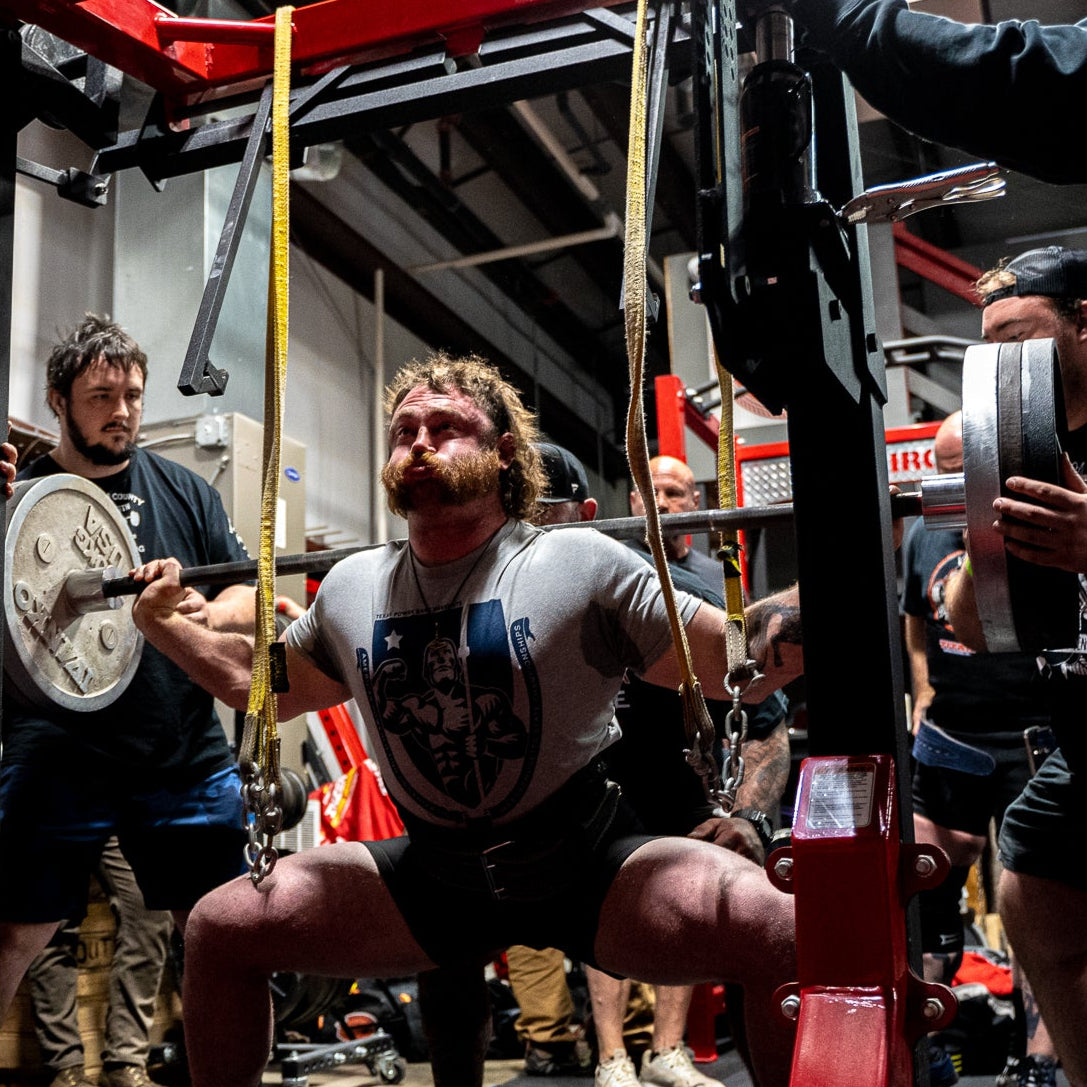
During a squat, the bar rests across the lifter's back. As the athlete walks out, descends, and drives upward, a flexible bar can oscillate and make the weight feel less stable.
During a deadlift, the bar begins on the ground. A thinner, longer shaft can flex as the lifter builds tension, allowing the bar to begin bending before the entire load leaves the floor.
These differences explain why powerlifters often prefer:
- Squat bars: Thicker shafts, increased rigidity, secure back knurling, and reduced oscillation.
- Deadlift bars: Thinner shafts, longer designs, controlled flex, and aggressive gripping surfaces.
- Power bars: Balanced construction for squat, bench press, and deadlift training.
No single design can maximize stiffness for squats and flexibility for deadlifts simultaneously. The right bar depends on the purpose.
What Makes a Dedicated Squat Bar Different?
A dedicated squat bar is engineered to provide stability under heavy loads.
Compared with traditional power bars, squat bars commonly use thicker shafts and heavier construction to reduce bending and oscillation.
The new Texas Squat Bar PRO takes that approach further with a redesigned 32mm shaft, shorter overall length, narrower inside-collar width, and low-profile collars.
Its design focuses on reducing unwanted movement while maintaining the loadable sleeve capacity needed for serious squat training.
Why the Texas Squat Bar PRO Uses a 32mm Shaft
Barbell shaft diameter plays a major role in bending stiffness.
For comparable solid steel shafts, stiffness increases significantly as diameter increases. A thicker shaft resists deflection more effectively than a thinner shaft of otherwise similar construction.
The outgoing Texas Squat Bar featured a 31.75mm shaft. The upgraded Texas Squat Bar PRO increases that diameter to 32mm.
Combined with its redesigned dimensions, this change helps create a more rigid bar for heavy squats.
Why Shorter Length and Low-Profile Collars Matter
Shaft diameter is only one part of the equation.
Overall length, effective bending span, and plate positioning also influence how a loaded barbell behaves.
The Texas Squat Bar PRO reduces overall length from 96.5 inches to 94.5 inches and inside-collar width from 57.5 inches to 55.5 inches.
Its redesigned low-profile collars position the weight plates closer to the lifter, helping reduce the effective loading span.
These changes are engineered to reduce flex and unwanted oscillation during heavy squat attempts.
Why End-to-End Knurling Matters
A squat bar needs more than stiffness. It also needs dependable traction against the lifter's back.
The previous Texas Squat Bar used a 6-inch center knurl. The Texas Squat Bar PRO replaces that limited section with aggressive end-to-end knurling and powerlifting and center alignment markings.
This expanded knurled surface provides grip across a much larger area of the shaft, helping lifters maintain secure high-bar and low-bar positioning.
The result is a squat-specific design focused on both stability and grip.
What Makes a Dedicated Deadlift Bar Different?
A deadlift bar is designed with a very different goal: controlled flex and maximum pulling grip.
Unlike squat bars, which prioritize rigidity, deadlift bars typically use thinner shafts and longer overall designs.
The Texas Deadlift Bar features:
- 27mm shaft diameter for a thinner gripping surface and controlled flex.
- 92.5-inch overall length to produce the feel associated with a dedicated deadlift bar.
- Aggressive knurling designed for heavy pulling.
- No center knurl to avoid unnecessary texture against the legs during the pull.
- 190,000 PSI tensile strength as part of its purpose-built steel design.
- American steel construction built for repeated heavy lifting.
The purpose of a deadlift bar isn't to be weak or permanently bend. It's to provide controlled elastic flex and return to straight after the load is removed.
Why Flex Helps During Heavy Deadlifts
During a heavy deadlift, a flexible bar begins bending as the lifter applies force.
Depending on the load and lifting technique, the shaft may flex before all the plates fully leave the ground.
This changes how tension develops during the initial pull and can create a different lifting experience compared with a stiffer power bar.
For lifters who compete with a dedicated deadlift bar, training on a similar bar can help them become familiar with its timing and feel.
The Texas Deadlift Bar is built around this controlled flex rather than maximum rigidity.
Squat Bar vs Deadlift Bar: Key Differences
| Feature | Texas Squat Bar PRO | Texas Deadlift Bar |
|---|---|---|
| Primary purpose | Heavy squat stability | Heavy pulling performance |
| Shaft diameter | 32mm | 27mm |
| Overall length | 94.5" | 92.5" |
| Shaft behavior | Maximum rigidity | Controlled flex |
| Knurling | Aggressive end-to-end | Aggressive grip, no center knurl |
| Bar weight | 55 lb / 25kg | Approximately 20kg |
| Tensile strength | 200,000+ PSI | 190,000 PSI |
Neither design is universally better. Each is designed around different loading demands.
Why Not Just Use One Power Bar for Everything?
You absolutely can.
For many lifters, a quality power bar is the most practical choice because it can handle squat, bench press, deadlift, rows, and general strength training.
But a versatile bar needs to balance competing design goals.
It cannot be as squat-specific as a 32mm dedicated squat bar while also providing the thinner gripping surface and flex of a 27mm deadlift bar.
That is why serious lifters and dedicated powerlifting gyms often use multiple barbells.
Choosing Between Original, PRO, ELITE, and Specialty Bars
For lifters who want a primary barbell for all three powerlifting movements, Texas Power Bars offers several options.
Original Texas Power Bar: Classic Versatility
The Original Texas Power Bar features a 28.5mm shaft and aggressive knurling. It's built for lifters who want the traditional Texas power bar feel across squat, bench press, and deadlift.
PRO Texas Power Bar: Upgraded Stiffness
The PRO Texas Power Bar features a 29mm shaft with a stiffer competition-style feel. It's a strong upgrade for lifters who want reduced whip while retaining three-lift versatility.
Texas Power Bar ELITE: Premium Three-Lift Performance
The Texas Power Bar ELITE is the premium option in the Texas Power Bars power bar lineup, featuring a refined 29mm competition-style design, low-profile collars, extended loading space, and a choice between aggressive and medium knurling.
It's designed for lifters who want a premium bar for squat, bench press, and deadlift rather than a single-lift specialty bar.
Texas Squat Bar PRO: Dedicated Squat Stability
The Texas Squat Bar PRO takes stiffness further with its 32mm shaft, compact geometry, and end-to-end knurling. It's built for lifters who prioritize heavy squat stability above all-around versatility.
Texas Deadlift Bar: Dedicated Pulling Performance
The Texas Deadlift Bar is built for lifters who prioritize pulling grip and controlled flex during heavy deadlifts.
Who Benefits Most From Dedicated Squat and Deadlift Bars?
Dedicated specialty bars can be valuable for:
- Competitive powerlifters: Especially when preparing for meets that use specialized bars.
- Heavy squat specialists: Lifters who want the additional rigidity of the Texas Squat Bar PRO.
- Deadlift-focused athletes: Lifters who prefer the grip and controlled flex of a dedicated deadlift bar.
- Powerlifting gyms: Facilities serving athletes with different strength levels and competition goals.
- Advanced home gyms: Lifters who already own a quality power bar and want specialized tools.
Most beginners do not need multiple specialized barbells immediately. A quality main power bar is often the best starting point.
Are Dedicated Squat and Deadlift Bars Competition Approved?
Competition equipment requirements vary by federation.
Some competitions use dedicated squat and deadlift bars, while others require a single approved power bar across all three lifts.
Before purchasing a specialty bar specifically for meet preparation, lifters should confirm the specifications and equipment used by their federation and competition organizer.
Using a similar bar in training can help athletes prepare for the equipment they'll encounter on the platform.
Final Thoughts: Different Lifts Demand Different Tools
Squat bars and deadlift bars exist because the squat and deadlift place different demands on the steel.
For heavy squats, rigidity and upper-back stability matter. For heavy deadlifts, grip and controlled flex can be valuable.
The Texas Squat Bar PRO reflects that distinction with an upgraded 32mm shaft, shortened geometry, low-profile collars, and aggressive end-to-end knurling.
The Texas Deadlift Bar takes the opposite engineering approach, using a thinner 27mm shaft and longer design to deliver controlled flex for heavy pulling.
Both are built for a purpose.
And for lifters who want the best of both worlds in one main barbell, the PRO and ELITE Texas Power Bars offer upgraded powerlifting options.
Made in Texas using American steel since 1980. Built for the lift. Built to last.
Shop Texas Squat Bar PRO | Shop Texas Deadlift Bar | Compare All Bars

Leave a comment
All comments are moderated before being published.
This site is protected by hCaptcha and the hCaptcha Privacy Policy and Terms of Service apply.