

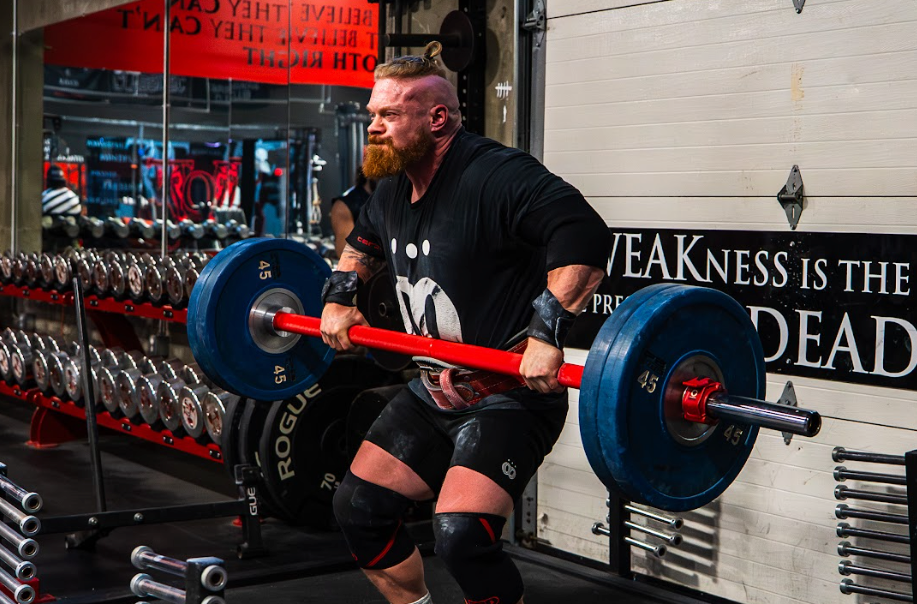
Why Grip Strength Limits More Lifts Than You Think (And How Fat Axle Bars Help)
Ever had the strength to finish a deadlift, but your hands couldn't hold onto the bar? Or felt your grip giving out during heavy rows before your back was even tired?
Grip strength is one of the most overlooked components of serious strength training. Your legs, back, and shoulders might be capable of moving more weight, but if your hands cannot maintain a secure connection to the bar, your performance can suffer.
That's why powerlifters, strongman athletes, and serious strength trainees incorporate dedicated grip work into their programs.
One of the simplest ways to challenge your grip is with a 2-inch fat axle barbell. The oversized shaft forces your hands and forearms to work harder to maintain their hold compared with a conventional 28–29mm barbell.
Texas Power Bars offers two American-made options: the full-size Texas 2" Fat Axle Power Bar and the new SHORTY Texas 2" Fat Axle Power Bar, designed for thick-grip accessory training in smaller spaces.
Why Does Grip Strength Matter in Weightlifting?
Grip strength is your ability to hold, squeeze, and control an object using the muscles of your hands and forearms.
During barbell training, your grip connects your body to the weight. If that connection fails, the lift may end before the primary muscles have reached their limit.
Grip strength matters particularly during:
- Deadlifts: Maintaining control of the bar throughout the pull.
- Barbell rows: Preventing your hands from fatiguing before your back.
- Heavy carries: Holding a loaded implement while moving.
- Pull-ups: Maintaining your hold during repeated repetitions.
- Strongman events: Handling thick bars, awkward implements, and heavy objects.
- Accessory exercises: Improving your ability to control resistance during curls, rows, and holds.
Not every plateau is caused by weak grip. Technique, overall strength, fatigue, and programming also matter. But when your hands consistently fail before the target muscles, dedicated grip training deserves attention.
What Causes Weak Grip Strength During Deadlifts?
During a heavy deadlift, your hands must resist the bar rolling or slipping out of your grip.
Grip difficulty can increase as bar weight rises, fatigue accumulates, or your hands become sweaty.
Knurling, chalk, grip style, and the diameter of the bar can all influence how securely you're able to hold the weight.
Training with a standard barbell remains important for developing the specific grip used in competition. However, accessory grip exercises can introduce additional challenges that regular deadlifts do not always provide.
How Does a Fat Axle Bar Improve Grip Training?
A fat axle bar features a substantially thicker shaft than a conventional barbell.
Instead of the typical 28–29mm grip diameter, a 2-inch axle uses a nominal 50mm gripping surface.
That larger diameter makes it harder to wrap your fingers completely around the shaft, increasing the gripping challenge even when using lighter weights.
Thick-grip exercises can help develop the hand and forearm strength needed to control larger implements.
They're especially useful for lifters who want to incorporate grip-focused rows, curls, holds, and strongman-style accessory movements.
Why Train With a 2-Inch Fat Bar Instead of a Regular Barbell?
A regular barbell is easier to grasp because of its thinner shaft.
With a thick bar, your hands are placed in a more open gripping position. Maintaining that hold requires additional effort.
This can make familiar exercises feel very different.
For example, a barbell row that primarily challenges your back with a conventional bar may become significantly more demanding for your grip when performed with a 2-inch axle.
That doesn't mean a fat axle replaces your main barbell. It creates a different training stimulus that can complement conventional strength work.
Introducing the SHORTY Texas 2" Fat Axle Power Bar
Traditional fat axle bars are often full-length implements that require substantial training space.
The SHORTY Texas 2" Fat Axle Power Bar brings thick-grip training into a compact 60-inch design.
Built in Texas using American steel, the SHORTY weighs approximately 40 pounds and features:
- 2-inch / nominal 50mm shaft diameter: An oversized grip that challenges your hands and forearms.
- 60-inch overall length: A compact footprint for garage gyms and smaller training spaces.
- 33.5-inch aggressively knurled shaft section: Provides a secure gripping surface for accessory movements.
- Four knurl ring markings: Helps lifters establish consistent hand positioning.
- Fully rotating sleeves: Allows the loaded sleeves to turn independently of the shaft.
- 11.5-inch loadable sleeves: Provides space for weight plates and compatible collars.
- American-made construction: Handbuilt in Texas using the Texas Power Bars manufacturing foundation.
The SHORTY is particularly well suited for curls, rows, controlled overhead pressing, and grip-focused holds where the shorter length is an advantage.
Explore the SHORTY Texas Fat Axle
Best Fat Axle Exercises for Grip Strength
1. Fat Axle Barbell Holds
One of the simplest ways to train grip is to hold a loaded fat axle for a controlled period.
Start with a manageable load and focus on maintaining a secure double-overhand grip without relying on straps.
Gradually increase the duration or weight as your grip adapts.
2. Thick-Grip Barbell Rows
Rows challenge the muscles of the back while requiring sustained grip throughout each repetition.
Using a 2-inch axle increases the difficulty of maintaining your hold.
The compact SHORTY is especially useful for this movement when training in a smaller garage gym.
3. Fat Bar Curls
Fat bar curls add a gripping challenge to a traditional biceps exercise.
Because the bar is harder to grasp, lifters may need to reduce the weight compared with standard barbell curls.
Focus on controlled repetitions and keeping your wrists in a comfortable position.
4. Double-Overhand Axle Deadlifts
Performing axle deadlifts with a double-overhand grip can be an effective way to challenge your ability to hold a thick bar.
Begin with substantially lighter weights than your normal deadlift and progress carefully.
For athletes who prefer a longer axle or train heavy axle pulls, the full-size Texas Fat Axle may be a better option.
5. Fat Axle Overhead Presses
Overhead pressing with a thick bar changes how the implement sits in your hands.
The rotating sleeves on Texas Fat Axle bars provide a useful distinction from conventional fixed-pipe axles, although sound pressing technique and load selection remain essential.
Start light and focus on controlled bar positioning.
SHORTY vs Full-Size Fat Axle: Which Is Better for Grip Training?
Both bars offer a 2-inch gripping surface, aggressive knurling, and rotating sleeves.
The main difference is the training environment and exercises each bar is designed to support.
| Feature | SHORTY Texas Fat Axle | Full-Size Texas Fat Axle |
|---|---|---|
| Overall Length | 60" | 86" |
| Weight | 40 lbs | 55 lbs |
| Shaft Diameter | 2" / 50mm nominal | 2" / 50mm nominal |
| Sleeve Rotation | Rotating | Rotating |
| Best For | Compact accessory and grip training | Full-size axle training and rack work |
Choose the SHORTY if you want a compact axle for curls, rows, grip holds, and accessory work without needing a full-length barbell.
Choose the full-size axle if you want traditional bar length, conventional rack-based training, and room for full-size axle movements.
Unlike the full-size axle, the SHORTY is not conventionally rackable between its collars. Do not assume that supporting its rotating sleeves on a rack is suitable without checking the rack design and manufacturer's instructions.
Shop SHORTY Texas Fat Axle | Shop Full-Size Texas Fat Axle
Can Thick Grip Training Improve Your Deadlift?
Grip-specific training may help lifters whose grip is a limiting factor in their deadlift.
However, improvements depend on the type of grip weakness, exercise selection, progression, and how well the training transfers to a normal barbell.
A thick axle is best viewed as an accessory that challenges your hands differently, not a guaranteed shortcut to a heavier deadlift.
Continue using your regular deadlift bar for competition-specific pulling practice while adding fat axle exercises to address grip limitations.
How Often Should You Train Grip Strength?
Grip training can be added one or two times per week as a starting point, depending on the rest of your program.
Because your hands and forearms already work during deadlifts, rows, pull-ups, and other exercises, additional grip work should be balanced against total training fatigue.
Begin conservatively and gradually increase training volume, resistance, or hold duration.
Stop if you experience sharp pain, numbness, or persistent discomfort.
Do You Need a Full-Size Barbell for Grip Training?
No. Many grip-focused accessory movements do not require a conventional seven-foot barbell.
A shorter axle is especially practical for curls, rows, and other free-weight exercises in compact training spaces.
The SHORTY Texas Fat Axle measures just 60 inches overall, making it a useful option for garages, home gyms, and smaller strength-training areas.
Its oversized 2-inch shaft provides the same basic thick-grip challenge as a full-size axle without requiring an 86-inch footprint.
Does Aggressive Knurling Make Fat Axle Training Better?
Many traditional axle bars have smooth gripping surfaces, which create a substantial challenge because of both shaft thickness and limited surface texture.
Texas Power Bars takes a different approach by incorporating aggressive knurling.
On the SHORTY, 33.5 inches of aggressive knurling help create a more secure gripping surface during rows, curls, and pressing movements.
This allows athletes to focus on training with the thicker shaft while still benefiting from the traction associated with Texas Power Bars.
The right amount of knurling aggression ultimately comes down to training purpose and personal preference.
Final Thoughts: Don't Let Grip Be the Weak Link
If your hands consistently give out before the rest of your body, adding targeted grip training may help address that limitation.
A 2-inch fat axle bar challenges your fingers, hands, and forearms differently than a conventional barbell, making it a useful accessory for pulling, curling, pressing, and grip holds.
The SHORTY Texas 2" Fat Axle Power Bar brings that challenge into a compact 60-inch design for smaller gyms and accessory training.
For lifters who prefer a conventional full-length axle and rack-oriented movements, the full-size Texas 2" Fat Axle Power Bar offers an 86-inch alternative.
Both are built in Texas using American steel, with aggressive knurling and rotating sleeves.
Train your grip. Build stronger hands. Give every heavy lift a better foundation.
Shop the SHORTY Texas Fat Axle | Shop the Full-Size Texas Fat Axle | Compare Texas Power Bars

Leave a comment
All comments are moderated before being published.
This site is protected by hCaptcha and the hCaptcha Privacy Policy and Terms of Service apply.