

What Is an Axle Bar? Benefits, Uses & Why Lifters Train With One
What is an axle bar, and why do strongman athletes, powerlifters, and serious strength trainees use one?
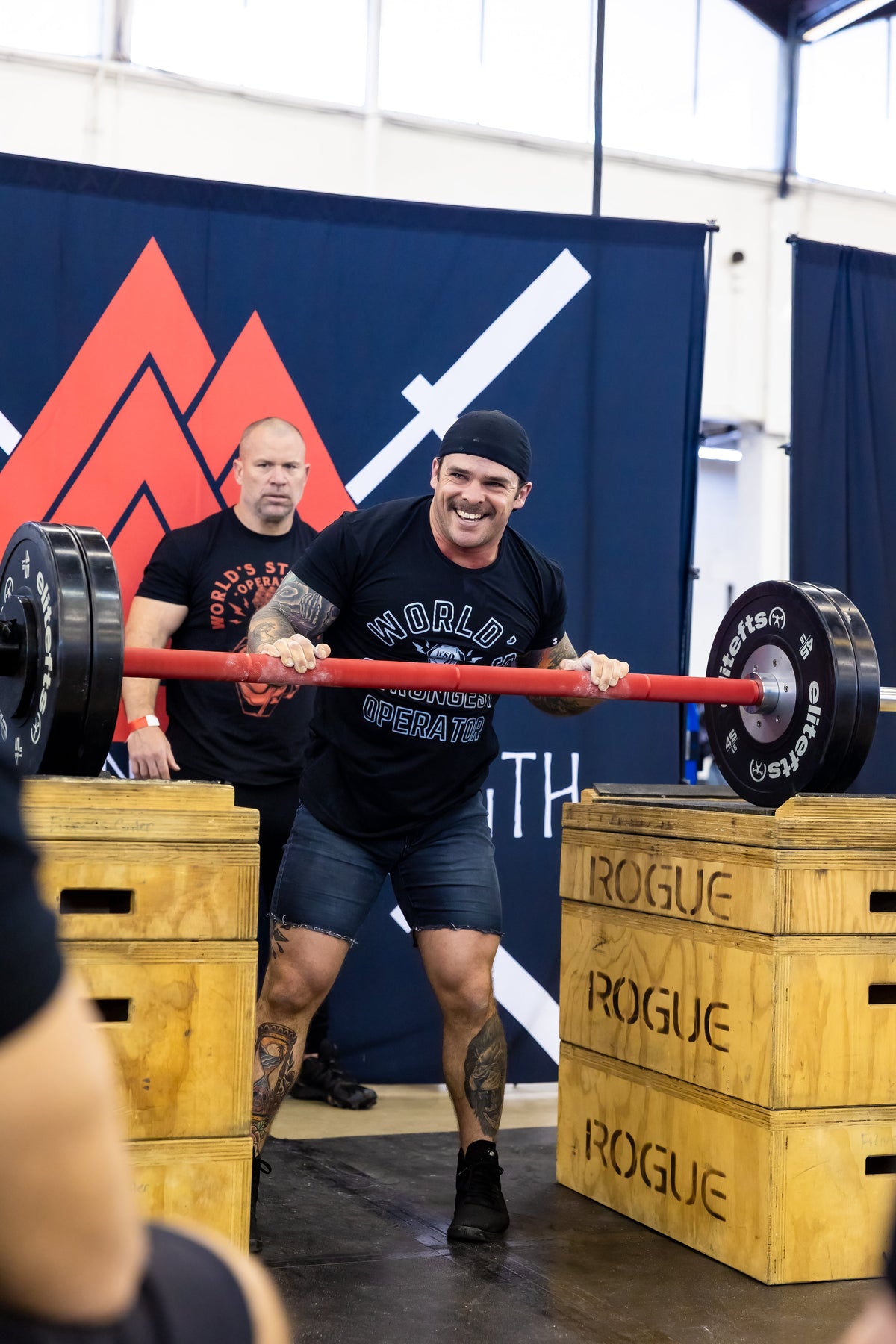
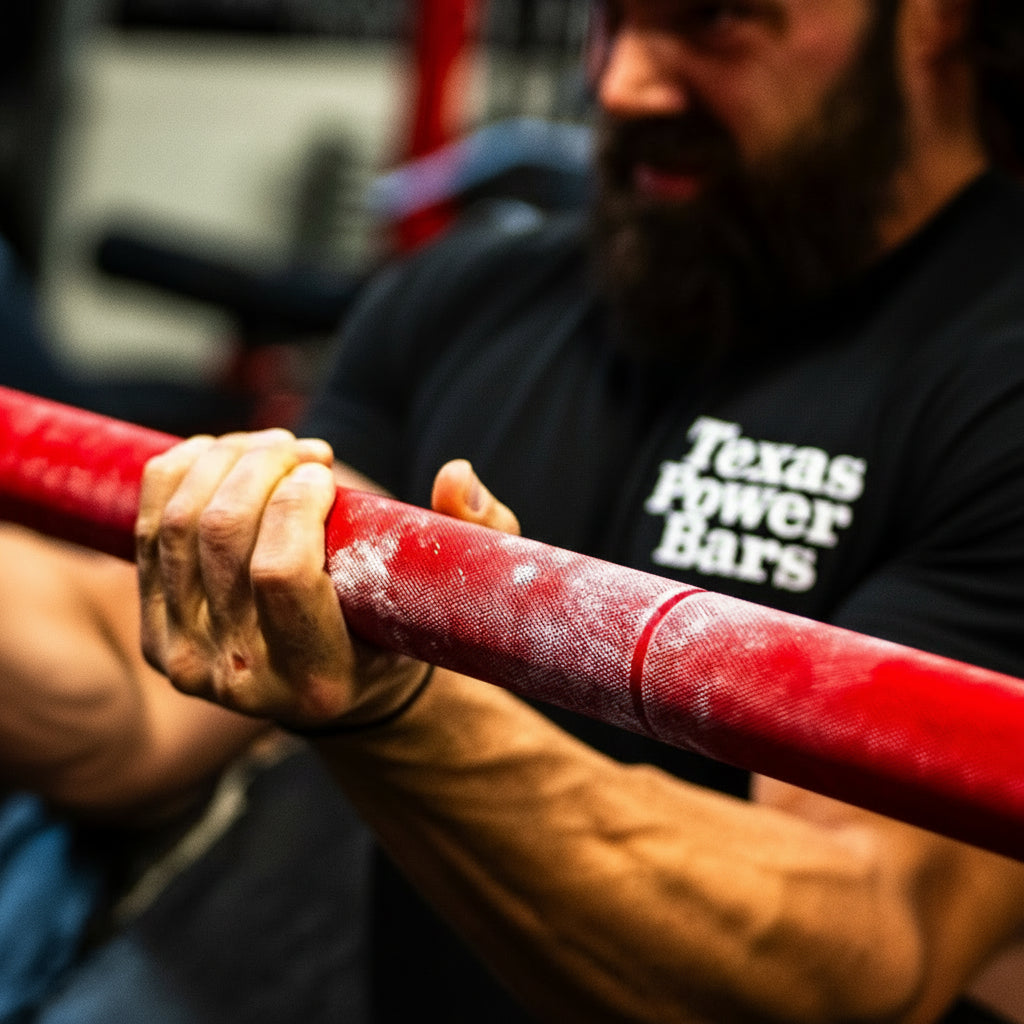
An axle bar, also called a fat axle bar, fat barbell, or thick-grip barbell, is a specialty strength-training bar with a much thicker shaft than a standard barbell. While traditional power bars typically have shafts measuring 28–29mm, a common axle bar has a gripping diameter of approximately 2 inches (50mm).
That oversized grip changes the challenge of familiar exercises. Deadlifts, rows, curls, presses, and holds become more demanding on the hands and forearms because your fingers cannot wrap around the shaft as completely.
At Texas Power Bars, we've built American-made barbells using American steel since 1980. Our full-size Texas 2" Fat Axle Power Bar and SHORTY Texas 2" Fat Axle Power Bar take thick-grip training further with aggressive knurling and fully rotating sleeves.
What Is an Axle Bar?
An axle bar is a thick-shaft barbell used primarily for grip development, strongman training, and specialized strength exercises.
The defining feature is its oversized shaft. A typical 2-inch axle requires a more open-handed grip than a conventional barbell, making it more difficult to maintain a secure hold during pulling movements.
Traditional strongman axles are often made with a smooth, fixed steel pipe. But modern axle barbells can also feature aggressive knurling, rotating sleeves, and more refined barbell construction.
The Texas Fat Axle lineup combines the oversized gripping challenge of an axle with the knurling and sleeve rotation associated with Texas Power Bars.
Axle Bar vs Regular Barbell: What's the Difference?
A conventional power bar is designed primarily for squat, bench press, and deadlift training. An axle bar is designed to introduce a thicker grip and a different handling challenge.
| Feature | Traditional Power Bar | 2-Inch Axle Bar |
|---|---|---|
| Typical shaft diameter | 28–29mm | Approximately 50mm |
| Primary purpose | General powerlifting | Thick-grip and specialty training |
| Grip challenge | Standard-diameter grip | Oversized gripping surface |
| Knurling | Typically knurled | Smooth or knurled |
| Sleeve rotation | Typically rotating | Often fixed; some rotating |
| Best training use | Squat, bench, deadlift | Grip holds, rows, curls, axle pulls and presses |
The difference is not simply weight or length. It's the way the bar challenges the lifter's hands.
What Are the Benefits of Axle Bar Training?
1. Increased Grip Strength Demands
A thicker bar makes it harder to wrap your fingers fully around the shaft. During exercises such as rows, static holds, and double-overhand pulls, this creates a greater gripping challenge.
Progressive axle training can be useful for developing grip-specific strength and endurance, particularly for lifters who want to become more comfortable holding thick implements.
2. More Forearm-Focused Accessory Work
Fat axle curls, rows, and holds challenge the muscles of the hands and forearms while you perform familiar strength movements.
With appropriate progressive overload and recovery, thick-grip training can contribute to forearm strength and development.
However, the thicker grip may require lighter weights. It should complement, not automatically replace, the exercises you use to build your back, biceps, and overall strength.
3. Strongman-Specific Grip Practice
Axle bars are common in strongman training because athletes often encounter thick, awkward, or challenging implements.
Practicing with an oversized shaft can help lifters become familiar with open-handed gripping, axle pulls, and pressing variations.
Competition equipment varies, however. Some events use smooth fixed axles, so athletes should verify the exact implement used in their event.
4. Variety for Curls, Rows, and Presses
Using an axle bar changes the gripping demands of exercises you already know.
A curl with a thick bar can challenge the forearms differently than a curl with a conventional bar. Rows can become more demanding on grip endurance, while overhead pressing requires the lifter to control a larger shaft in the hands.
This variety makes axle bars a useful accessory alongside normal barbell training.
5. A Different Training Stimulus Without Replacing Your Main Bar
One of the biggest advantages of an axle bar is that you can incorporate it without rebuilding your entire workout program.
Keep your normal power bar for primary strength work, then introduce axle curls, rows, holds, and selected pulling or pressing exercises.
That allows you to develop grip-specific capacity while maintaining practice with the equipment used for your main lifts.
Are All Axle Bars Smooth Steel Pipes?
No. Traditional axle bars are often smooth, fixed-pipe implements, but that isn't the only available design.
Texas Power Bars manufactures axle barbells with aggressive knurling and fully rotating sleeves.
The knurling provides additional traction against the hands, while the rotating sleeves allow loaded plates to turn independently of the shaft.
This creates a different training feel than a completely smooth, fixed-sleeve axle.
Neither design is universally better. Smooth fixed axles are useful for event-specific training, while knurled rotating-sleeve bars offer additional options for general accessory work.
What Are Rotating Sleeves on an Axle Bar?
Rotating sleeves allow the plate-loading portions of the bar to turn independently of the gripping shaft.
On a traditional fixed axle, rotation of the loaded plates can be transmitted through the shaft to the lifter's hands.
The Texas Fat Axle bars use rotating sleeves, giving lifters a different feel during curls, rows, presses, and selected dynamic movements.
While sleeve rotation can affect how rotational forces are transmitted, it does not eliminate injury risk. Proper technique, manageable loading, and appropriate movement selection remain essential.
What Is the SHORTY Texas 2" Fat Axle Power Bar?
The SHORTY Texas 2" Fat Axle Power Bar is a compact five-foot specialty axle designed for thick-grip training in tighter spaces.
It combines the 2-inch gripping challenge of a full-size axle with a shorter, more manageable footprint.
Key features include:
- 60-inch overall length for compact training spaces.
- 40lb starting weight for accessory exercises.
- 2-inch (nominal 50mm) shaft for thick-grip training.
- 33.5-inch aggressive knurled section for traction.
- Four knurl marks for consistent grip positioning.
- Fully rotating sleeves for more versatile movement.
- 11.5-inch loadable sleeves for plates and compatible collars.
- Cerakote shaft finish for corrosion resistance.
- American steel construction handbuilt in Texas.
The SHORTY is particularly suited to curls, bent-over rows, grip holds, controlled overhead pressing, and compact accessory training.
Shop SHORTY Texas 2" Fat Axle Power Bar
SHORTY vs Full-Size Axle Bar: Which Should You Choose?
Texas Power Bars offers two axle models with different training priorities.
| Feature | SHORTY Texas Fat Axle | Full-Size Texas Fat Axle |
|---|---|---|
| Overall length | 60" | 86" |
| Weight | 40lb | 55lb |
| Shaft diameter | 2" nominal | 2" nominal |
| Knurling | 33.5" aggressive section | Aggressive |
| Sleeve rotation | Rotating | Rotating |
| Rack use | Not conventionally rackable between collars | Designed for compatible full-size racks |
| Best fit | Compact accessory training | Full-size axle and rack-oriented training |
The SHORTY is 26 inches shorter than the full-size axle, making it more convenient for lifters with limited space.
The full-size version provides traditional barbell dimensions for conventional rack work and longer axle exercises.
Note: The SHORTY is not conventionally rackable inside its collars. Although its sleeves may reach supports on some racks, verify suitability with the rack manufacturer. Rotating-sleeve support should not automatically be treated as conventional rackability.
Best Axle Bar Exercises for Beginners
Fat Axle Holds
Start with a manageable weight and hold the axle using a double-overhand grip for a controlled duration. Gradually increase the weight or hold time as your grip adapts.
Axle Bar Curls
Perform controlled curls with the oversized shaft. You may need less weight than with a regular barbell because gripping the thicker shaft is more difficult.
Thick-Grip Barbell Rows
Use the axle for bent-over rows, keeping the movement controlled. Stop the set when grip fatigue begins to compromise technique.
Axle Deadlifts
Begin with lighter loads and practice maintaining a secure grip throughout the pull. For full-length heavy axle pulling, consider the full-size Texas Fat Axle.
Axle Overhead Presses
Use a suitable weight and practice comfortable hand and wrist positioning. The rotating sleeves on Texas Fat Axle bars offer a different mechanical feel than fixed-sleeve axles.
Can Axle Bar Training Improve Your Deadlift?
Axle training can strengthen your ability to hold a thick implement and may be useful for addressing grip limitations.
However, getting stronger on a 2-inch axle does not automatically translate into an equivalent increase in competition deadlift performance.
The most effective approach is to combine grip-specific accessory work with regular deadlifts, sound technique, and progressive training.
Does an Axle Bar Build Bigger Forearms?
Thick-grip curls, rows, and holds can increase demand on the gripping muscles of the hands and forearms.
With progressive overload, sufficient training volume, and recovery, these exercises can contribute to forearm strength and muscle growth.
They should be viewed as one part of an overall strength program rather than a guaranteed shortcut to bigger forearms.
Is an Axle Bar Worth Buying for a Home Gym?
If your goal is grip development, forearm training, strongman-style accessory work, or simply adding new training variations, an axle bar can be a useful investment.
For home gyms with limited space, the SHORTY Texas Fat Axle offers the thick-grip challenge in a compact 60-inch format.
For lifters who want conventional rackability and full-size axle training, the 86-inch Texas Fat Axle is the more suitable option.
Most lifters should consider an axle bar a specialty addition rather than a replacement for their primary power bar.
Final Thoughts: What Is an Axle Bar?
An axle bar is a thick-shaft specialty barbell designed to challenge grip and add variety to strength training.
The oversized 2-inch shaft changes how your hands interact with the weight, making it useful for rows, curls, holds, selected pulling movements, and strongman-oriented training.
The SHORTY Texas 2" Fat Axle Power Bar brings those benefits to compact gyms with a 60-inch design, aggressive knurling, and rotating sleeves.
The full-size Texas 2" Fat Axle Power Bar delivers a longer alternative for conventional rack-based axle training.
Both are built in Texas using American steel and decades of barbell manufacturing experience.
Big grip. Real steel. Built in Texas.
Shop SHORTY Texas Fat Axle | Shop Full-Size Texas Fat Axle | Shop Specialty Barbells

Leave a comment
All comments are moderated before being published.
This site is protected by hCaptcha and the hCaptcha Privacy Policy and Terms of Service apply.