

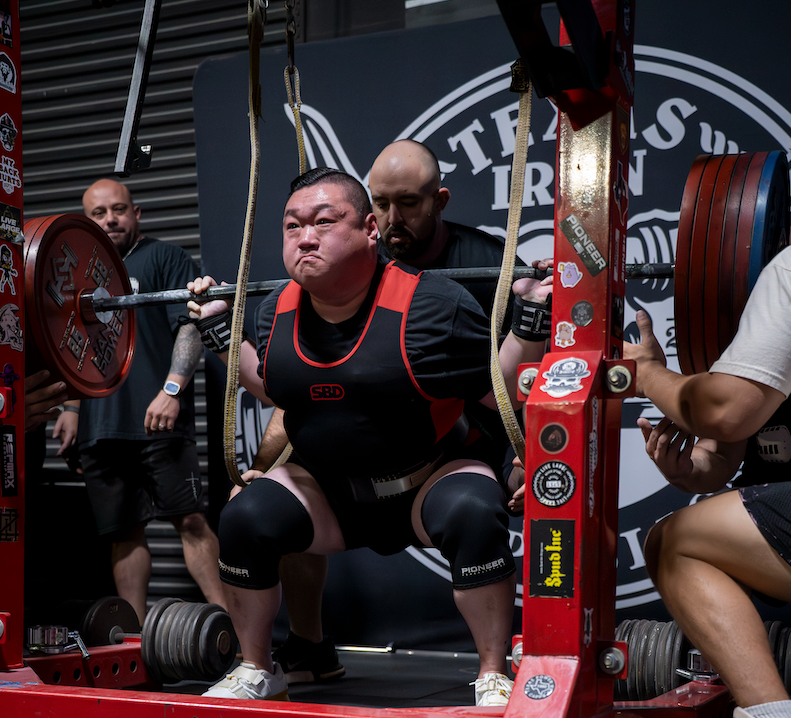
Why Are Squat Bars Thicker? Squat Bar vs Power Bar Explained
Squat bars are thicker than standard power bars for one primary reason: stiffness.
When a barbell carries hundreds of pounds across a lifter's back, the shaft can bend under the load. As the bar moves, that bending can create oscillation, commonly described by lifters as whip or bounce.
A thicker shaft helps resist that bending, making the bar feel more stable during heavy squats.
But shaft thickness is only part of the equation. Bar length, inside collar width, plate position, steel characteristics, and overall design also affect how a squat bar behaves.
At Texas Power Bars, we've been manufacturing American-made barbells using American steel since 1980. Our newest Texas Squat Bar PRO builds on decades of experience with an upgraded 32mm shaft and a redesigned, more compact geometry intended to reduce flex under extreme loads.
Why Are Squat Bars Thicker Than Power Bars?
A standard power bar needs to perform across three different lifts: squat, bench press, and deadlift.
A dedicated squat bar is built around one movement.
Because maximum pulling flexibility is not a priority during squats, manufacturers can use a thicker shaft to increase stiffness and reduce unwanted movement.
Common examples include:
- 28.5mm: Classic power bar diameter used by the Original Texas Power Bar.
- 29mm: Stiffer competition-style power bar diameter used by the PRO Texas Power Bar and Texas Power Bar ELITE.
- 32mm: Dedicated squat bar diameter used by the Texas Squat Bar PRO.
For bars made from comparable materials, increasing shaft diameter increases resistance to bending. That's one reason a 32mm squat bar can feel significantly more rigid than a traditional 28.5mm power bar.
How Shaft Diameter Affects Barbell Stiffness
The bending stiffness of a round steel shaft depends strongly on its diameter.
For an ideal solid circular shaft of the same material, bending stiffness is proportional to the fourth power of its diameter.
That means relatively small increases in shaft diameter can produce meaningful increases in rigidity, even before accounting for other changes to the bar's design.
However, diameter alone does not determine the complete feel of a loaded barbell. Effective shaft span, plate loading, construction, and steel properties also matter.
This is why squat bar engineering requires looking at the entire bar rather than one specification.
Why Bar Length and Inside Collar Width Matter
Squat bar stability depends on more than how thick the shaft is.
A longer unsupported section of bar has more opportunity to deflect under load.
That is one reason the new Texas Squat Bar PRO uses a shorter overall design and narrower inside collar width than the previous generation.
The PRO measures 94.5" long overall with a 55.5" inside collar width, compared with 96.5" overall and 57.5" between the collars on the outgoing model.
It also uses redesigned low-profile collars to position the weight plates closer to the lifter.
Together with the 32mm shaft, these changes are designed to increase stiffness and reduce unwanted oscillation during heavy squats.
What Is Barbell Whip, and Why Does It Matter for Squats?
Barbell whip describes the dynamic movement that occurs when a loaded bar flexes and oscillates.
Some flexibility is desirable for certain types of lifting. Deadlift bars, for example, are designed with a longer, thinner shaft to provide controlled flex during heavy pulls.
Heavy squats present different demands.
As the lifter walks out of the rack, descends, changes direction, and drives upward, the bar may flex and rebound.
Excessive oscillation can make the weight feel less predictable and require the lifter to manage additional movement.
A dedicated squat bar prioritizes stability by reducing that movement.
Why the Texas Squat Bar PRO Uses a 32mm Shaft
The previous Texas Squat Bar used a 31.75mm shaft. The new Texas Squat Bar PRO upgrades that diameter to 32mm.
Although the numerical difference appears small, it is part of a broader redesign aimed at maximizing rigidity.
The complete PRO upgrade includes:
- 32mm shaft: Increased shaft diameter for greater resistance to bending.
- 94.5" overall length: Reduced from 96.5".
- 55.5" inside collar width: Reduced from 57.5".
- Low-profile collars: Position plates closer to the lifter.
- 17.75" loadable sleeves: Increased from 16.875" to allow more plate-loading space.
- End-to-end aggressive knurling: Expanded from the previous 6-inch center knurl.
Rather than relying on shaft diameter alone, these changes address several factors involved in squat bar stiffness, grip, and loading capacity.
Why Do Squat Bars Weigh 55 Pounds?
Many traditional power bars weigh approximately 44–45 pounds, or 20 kilograms.
Dedicated squat bars commonly weigh 55 pounds, or approximately 25 kilograms, because of their thicker shafts and heavy-duty construction.
The Texas Squat Bar PRO maintains the 55 lb / 25 kg weight of the previous generation while incorporating the new shaft diameter and geometry.
When loading the bar, lifters should remember that the starting weight differs from a standard 20kg power bar.
Why Do Squat Bars Have Aggressive Knurling?
During squats, knurling helps keep the bar secure across the lifter's back.
Different squat styles place the bar in different positions, from high-bar placements across the traps to lower-bar positions across the rear delts.
A secure bar-to-back connection helps lifters maintain their intended position, particularly under heavy loads.
The Texas Squat Bar PRO uses aggressive end-to-end knurling instead of the previous generation's limited 6-inch center section.
This expanded knurled surface provides grip across a much greater portion of the shaft and includes alignment markings to help lifters position themselves under the bar.
Squat Bar vs Power Bar: Which Should You Choose?
Both can be excellent tools, but they serve different purposes.
A power bar is designed for versatility across squat, bench press, and deadlift. A dedicated squat bar prioritizes stability under heavy squat loads.
| Bar Type | Shaft Diameter | Primary Purpose |
|---|---|---|
| Original Texas Power Bar | 28.5mm | Classic three-lift powerlifting |
| PRO Texas Power Bar | 29mm | Stiffer three-lift powerlifting |
| Texas Power Bar ELITE | 29mm | Premium competition-style power bar |
| Texas Squat Bar PRO | 32mm | Dedicated heavy squat stability |
For lifters who want one barbell across all three powerlifting lifts, the PRO Texas Power Bar or Texas Power Bar ELITE offers a strong upgraded option.
For those prioritizing dedicated heavy squat training, the Texas Squat Bar PRO provides a thicker shaft and squat-specific geometry.
Do Beginners Need a Thick Squat Bar?
Most beginners do not need a dedicated squat bar as their first barbell.
A quality power bar can handle squats, bench press, deadlifts, and other major strength movements.
As weights increase and training becomes more specialized, a dedicated squat bar may become more valuable.
Lifters preparing for competitions that use specialty squat bars may also benefit from training with equipment similar to what they expect on the platform.
Why Loadable Sleeve Length Matters on Squat Bars
Heavy squat training requires enough room for the plates and collars needed for a lifter's working weight.
The Texas Squat Bar PRO increases loadable sleeve length to 17.75 inches, providing more room than the outgoing generation.
This is particularly relevant for athletes using thick plates or loading the bar heavily.
The low-profile collar design and shorter shaft geometry allow the PRO to offer longer loadable sleeves while reducing overall bar length.
Final Thoughts: Why Are Squat Bars Thicker?
Squat bars are thicker primarily because increased shaft diameter helps resist bending and reduce unwanted movement under heavy weight.
But a great squat bar requires more than thickness alone.
Its overall geometry, inside collar width, knurling, steel, and sleeve design all contribute to how it performs.
The Texas Squat Bar PRO combines a 32mm shaft, shorter overall length, narrower collar span, aggressive end-to-end knurling, and longer loadable sleeves into a purpose-built heavy squat bar.
For lifters who want maximum squat-specific stability, those details matter.


Leave a comment
All comments are moderated before being published.
This site is protected by hCaptcha and the hCaptcha Privacy Policy and Terms of Service apply.